
Things to Do in United States in March
March weather, activities, events & insider tips
Shoulder Season · Good Value
March Weather in United States
Long-run averages for March in New York
56°F (13°C)
High Temp
38°F (3°C)
Low Temp
3.5 inches (89 mm)
Rainfall
65%
Humidity
5
Sunny-Day UV
⚠ Severe thunderstorms and tornadoes hit the Great Plains and Deep South from mid-March onward. The Texas-Oklahoma-Kansas corridor into the lower Mississippi Valley enters severe season then. Monitor local alerts. Know your nearest sturdy shelter. March tornadoes happen every year.
⚠ Late nor'easters strike the Eastern Seaboard from Virginia to Maine. Expect heavy snow, coastal flooding, and cascading flight cancellations through JFK, Newark, and Boston Logan. Build one buffer day. Skip tight connections.
⚠ Altitude sickness threatens western destinations above 2,000 m (6,500 ft). The Grand Canyon's North Rim, Colorado and Utah ski resorts, and Santa Fe, New Mexico all qualify. Arriving from sea level? Take one acclimatization day. Drink more water than you think you need. Watch for headache, nausea, or unusual fatigue.
Is March Right for You?
Weigh the advantages and considerations before booking
Advantages
- + March is the Southwest's sweet spot. Daytime temperatures hit 24-27°C (75-80°F) across Arizona and southern Utah. Wildflowers explode across the Sonoran Desert floor after winter rains. Hiking conditions at the Grand Canyon approach perfection. You can tackle the Bright Angel Trail without summer's heatstroke risk or January's ice patches. Pack layers. The desert cools fast after sunset.
- + Washington DC's cherry blossoms open in late March along the Tidal Basin. The two-week peak bloom window ranks among American travel's most singular spectacles. Pale pink canopy reflects in still water. The Jefferson Memorial rises behind it. This rare sight lives up to its photographs. Arrive early. The crowds thicken by mid-morning.
- + Shoulder-season pricing covers most of the country, minus Florida and ski resorts. New Orleans, Nashville, Savannah, and San Francisco all run noticeably cheaper than peak months. You can often book weeks ahead, not months. Spring-break beach towns spike hard from mid-March onward. Avoid them. Or lean in.
- + Spring training runs through March in Arizona's Cactus League and Florida's Grapefruit League. The experience differs from regular-season games. Small stadiums let you hear infielders chatter. Players sign autographs along the rails. The atmosphere stays relaxed. Sold-out Yankee Stadium cannot replicate this. Bring sunscreen. The Florida sun burns.
Considerations
- − The northern half remains locked in late winter. New York's average high of 13°C (56°F) sounds manageable. The reality bites harder. Raw Hudson wind. Grey skies stretching for days. Damp cold that jackets alone fail to fix. Chicago, Minneapolis, and Boston match or exceed this misery. If you picture warm, sunny America, March delivers only south of roughly the 35th parallel. Pack wool. Pack more wool.
- − Spring break crushes Florida from roughly mid-March through early April. Beaches, theme parks, and the Gulf Coast shoulder maximum crowds. Panama City Beach, South Padre Island, and Orlando hit annual peaks. Room rates can double. The demographic skews young and loud. This is either the draw or your warning. Book early. Or skip entirely.
- − Weather whiplash defines March. Severe thunderstorms peak across the Great Plains and Deep South. Late nor'easters still hammer the Eastern Seaboard with snow and wind. Three days of 20°C (68°F) sunshine might collapse into sleet. Flexibility is mandatory. Not optional. Check forecasts daily. Pack for everything.
Best Activities in March
Top things to do during your visit
March in the United States arrives as a season of transition, when winter loosens its hold unevenly across a continent-sized country. Along the Eastern Seaboard, average highs climb toward 56°F while lows still dip near 38°F, and 3.5 inches of rainfall keeps the ground soft and the air carrying that particular mineral smell of thawing earth. In the desert Southwest, the shift is more dramatic. Canyon rims that were ice-locked in January now warm under an unobstructed sun, and the red sandstone of southern Utah and northern Arizona radiates heat you can feel through your boot soles by midday. The Great Basin and Rocky Mountain corridors remain cold at elevation, with snowpack still deep in the high country. The valleys below are stirring. Sagebrush greens. Meltwater runs loud through narrow gorges. The first returning raptors wheel above the plateaus. This is the month when the United States rewards travelers who think beyond the obvious. Beach destinations along the Gulf Coast and Southern California are warming but not yet swamped with summer crowds. The sand still holds footprints from the morning. Restaurant tables at waterfront spots open up without a wait. In cities like San Francisco and New York, the cultural calendar is full. Theater seasons are deep into their runs. Museums mount spring exhibitions. Neighborhood restaurants serve the first seasonal menus built around tender greens and early asparagus, their kitchens fragrant with butter and fresh herbs. The pace of American life in March is neither the frantic energy of summer nor the hunkered stillness of deep winter. It sits in a productive middle gear, and that quality transfers to the travel experience. Lines at major attractions are shorter. Accommodation rates sit below their peak-season ceilings. The locals you encounter are more inclined to linger over conversation. The pressure of high season has not yet arrived. For those drawn to the adventurous side of the United States, March opens access to landscapes that are either too hot or too crowded later in the year. The Grand Canyon's South Rim temperatures hover in a range that makes all-day hiking comfortable rather than punishing. Utah's canyon country, Zion, Bryce, the whole red-rock corridor, offers clear sightlines without the heat shimmer that distorts summer views. And in the northern Rockies, Yellowstone's thermal features are at their most visually dramatic. The contrast between scalding geothermal steam and cold March air produces towering plumes visible from miles away. Whether you are crossing the country or targeting a single region, March delivers the substance of American travel without the friction.

Vegas: Grand Canyon, Hoover Dam, Lunch/Skywalk Options, WiFi
adventureThis full-day expedition departs the neon-bright sprawl of Las Vegas and drives southeast through the Mojave, where the creosote flats give way abruptly to the immense silence of the Grand Canyon's West Rim. The route passes Hoover Dam, its Art Deco intake towers rising from water so turquoise it looks artificially dyed, and the sheer concrete face of the dam hums with a low vibration you feel in your chest as you stand on the walkway. At the canyon itself, the optional Skywalk, a horseshoe of glass cantilevered over 4,000 feet of empty air, delivers a visceral, knee-weakening perspective. You look straight down through the transparent floor to the rust-colored Colorado River threading between ancient schist walls.
It compresses three of the American West's most well-known engineered and natural landmarks into a single day, with the scale of the Grand Canyon hitting harder for the contrast with the dam's precise geometry.
Insider tip: Request a window seat on the left side of the vehicle for the outbound leg. The approach to Hoover Dam from the Nevada side gives you unobstructed views of the dam face and the bypass bridge arching above it, while passengers on the right see mostly hillside.
This month: March temperatures at the Grand Canyon's West Rim average in the mid-50s°F during the day, making extended time on the exposed rim and Skywalk comfortable without the brutal heat that forces summer visitors to retreat by late morning.

Alcatraz Island & 48-Hour Hop-On Hop-Off Tour
transportThe ferry to Alcatraz crosses San Francisco Bay in about fifteen minutes, long enough for the salt wind to sting your face and for the island's stark concrete cellhouse to grow from a grey smudge to a looming, paint-peeled fortress. The audio tour inside the cellblock is narrated partly by former inmates and guards, their gravelly voices echoing off the steel tiers while you stand in a five-by-nine-foot cell and feel the cold radiating from the bare walls. The 48-hour hop-on hop-off bus component covers the city's famous hills and neighborhoods, from the sourdough-scented bakeries of Fisherman's Wharf to the eucalyptus groves of the Presidio, where the sharp herbal fragrance cuts through the fog.
Alcatraz is the rare attraction where the physical experience, the isolation, the chill, the claustrophobic cells, communicates its history more powerfully than any textbook.
Insider tip: Book the first ferry of the day. Early arrivals get roughly twenty minutes on the island before the next boatload, and the cellhouse corridors are quiet enough that you can hear the dripping condensation and the distant foghorn that defined daily life for prisoners.
This month: March is one of the foggier months on San Francisco Bay, which enhances the Alcatraz experience. The island materializing through mist as the ferry approaches is atmospheric in a way clear-sky visits cannot replicate. Expect average highs near the mid-50s°F and dress in wind-blocking layers.
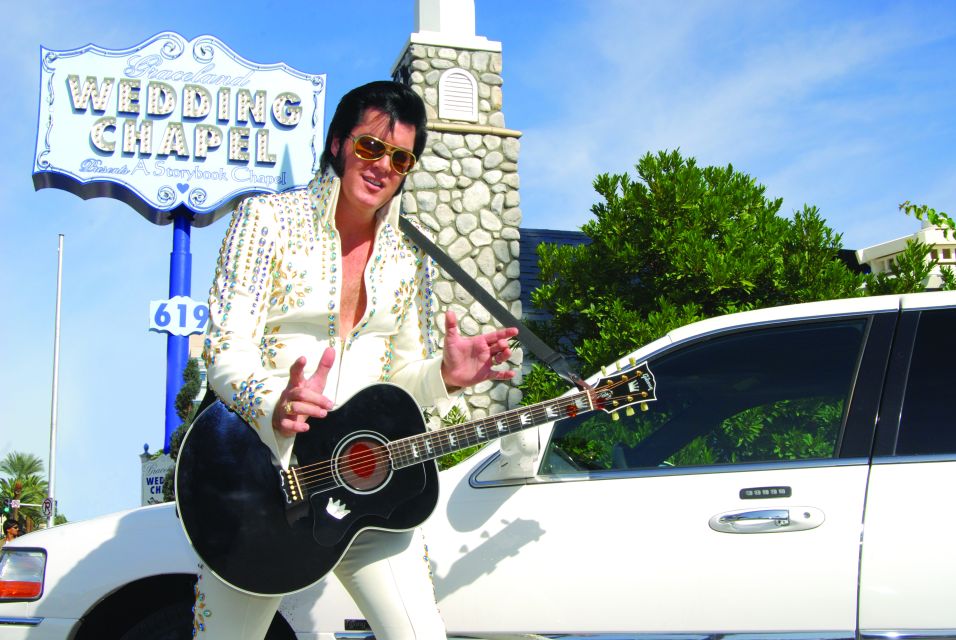
Elvis-Themed Graceland Chapel Wedding or Vow Renewal
otherInside a small white chapel on the Las Vegas Strip, an Elvis impersonator in a rhinestone-studded jumpsuit croons "Can't Help Falling in Love" while the scent of fresh-cut flowers and the faint sweetness of stage fog fill the room. The ceremony, whether a legal wedding or a vow renewal, lasts about thirty minutes. But the theatricality is dialed to maximum. Colored spotlights sweep the aisle. The officiant delivers lines in a deep Memphis drawl. The chapel's interior gleams with polished wood pews and satin draping. It is absurd. It is earnest. The guests who witness it tend to laugh and cry in equal measure, which is the entire point of Las Vegas as a cultural phenomenon.
No other ceremony on earth so well distills the American impulse to fuse sincerity with spectacle. It is romantic and ridiculous in precisely the right proportions.
Insider tip: If you are renewing vows rather than legally marrying, you skip the Clark County marriage license requirement entirely, which saves a trip to the downtown courthouse and the wait that comes with it.

Full-Day Guided Yellowstone Day Tour
day_tripYellowstone in late winter and early spring is a landscape operating at extremes. Snow still blankets the meadows and lodgepole pine forests in white so bright it aches behind your eyes, while the park's ten thousand thermal features, geysers, fumaroles, mud pots, hot springs, punch through the cold with clouds of sulfur-tinged steam that rise hundreds of feet into the frigid air. A guided day tour routes through the park's marquee sites. Old Faithful's predictable eruptions. The prismatic rings of Grand Prismatic Spring where scalding water shades from deep cobalt at the center through bands of emerald, gold, and rust-orange at the bacterial margins. The travertine terraces of Mammoth Hot Springs, where mineral-laden water has built staircase formations that click underfoot like porcelain. The smell of hydrogen sulfide hangs in pockets along the boardwalks, sharp and unmistakable, and the sound of geysers venting, a low, throaty hiss that builds to a roar, carries across the still winter landscape with startling clarity.
Yellowstone's geothermal features are never more visually dramatic than when framed against snow and cold air, and a guided tour handles the logistics of navigating a park where March road conditions remain serious.
Insider tip: Bring a buff or balaclava for the boardwalk stops. Standing still near thermal features in March means your face catches both the scalding steam and the ambient cold simultaneously, and exposed skin chaps fast.
This month: Some Yellowstone roads remain closed to wheeled vehicles through mid-March or later depending on snowpack, so guided tours in early March may use snowcoaches on certain segments. Road openings depend on plowing progress and vary year to year. Confirm the specific itinerary with the operator before booking.
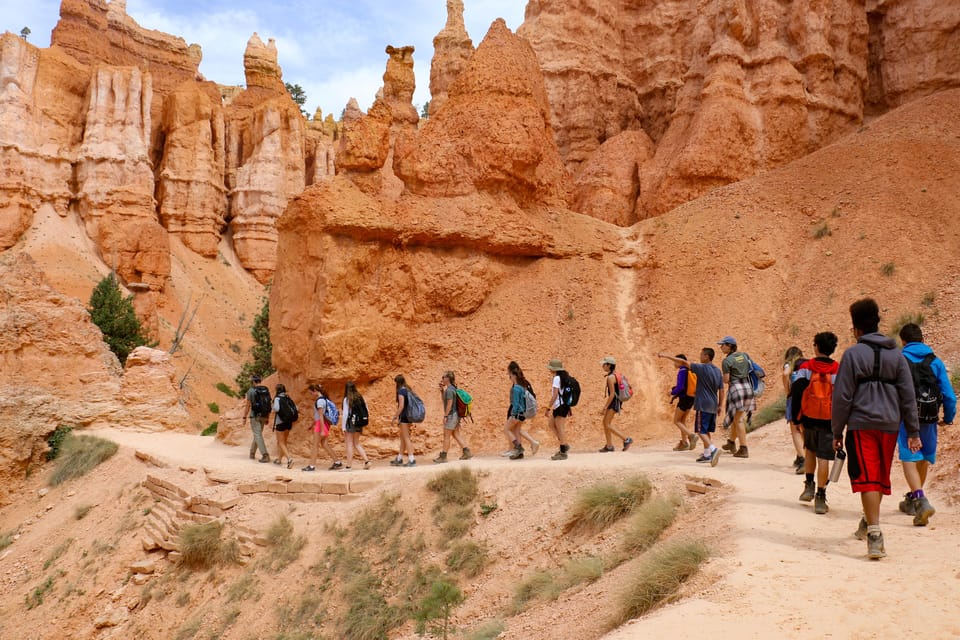
Bryce and Zion National Parks Tour with Lunch
guided_experienceThis tour pairs two of Utah's most geologically distinct parks in a single day, and the contrast between them is the whole appeal. Bryce Canyon's amphitheaters hold thousands of hoodoos, tall, narrow rock spires eroded into shapes that look like hooded figures, chess pieces, and cathedral organs, and from the rim the view drops into a forest of orange and cream-colored pinnacles so dense it resembles an alien city. The air at Bryce's 8,000-foot elevation is thin and cold in March, carrying the clean resinous scent of ponderosa pine. Zion, by contrast, sits lower in a deep sandstone canyon where the Virgin River has carved walls that rise 2,000 feet on either side, their surface streaked with dark desert varnish that weeps down the red and tan cliff faces like spilled ink. The sound of the river, steady, muscular, amplified by the narrow canyon, follows you everywhere.
Seeing Bryce and Zion back to back reveals how different erosion can sculpt the same Colorado Plateau sandstone, and the emotional register shifts from Bryce's eerie delicacy to Zion's overpowering mass.
Insider tip: Wear shoes with aggressive tread. The Bryce rim trail and Zion canyon walkways can have patches of ice or compacted snow in March, on north-facing sections that stay shaded until midday.
This month: Bryce Canyon at 8,000 feet still averages below-freezing overnight lows in March, and snow on the ground is common. The contrast of orange hoodoos capped with fresh white snow is one of the most photographed scenes in the American Southwest, specific to this narrow seasonal window.
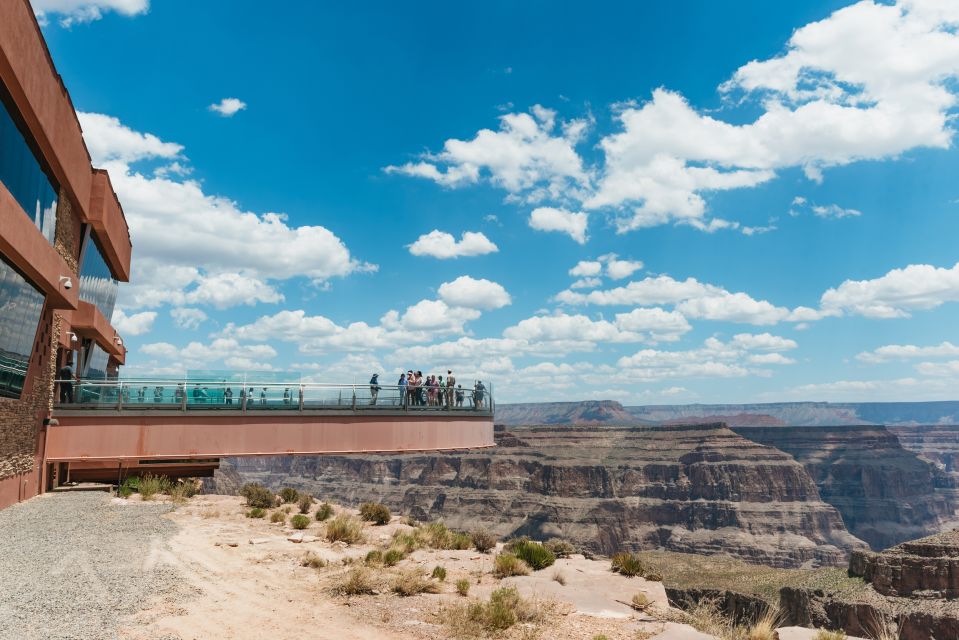
Vegas: Grand Canyon, Hoover Dam, Skywalk Option, & Two Meals
adventureThis variant of the Las Vegas-to-Grand Canyon day trip includes two full meals, a detail that matters more than it might sound, because the West Rim sits on the Hualapai Reservation where food options are limited and overpriced, and arriving fed lets you spend your canyon time at the rim rather than in a queue. The route follows the same dramatic trajectory from the flat, shimmering Mojave basin through the Joshua tree belt and into the Grand Canyon's western approach, where the earth simply drops away without warning. One moment you are walking across scrubby desert, and the next you are standing at the edge of a chasm so deep the river at the bottom looks like a copper thread. Hoover Dam's stop lets you feel the thrumming turbines through the observation deck floor and smell the dry concrete and river mist mixing in the intake tower ventilation. The optional Skywalk adds the vertiginous glass-floor experience over the void.
The included meals remove the single biggest logistical frustration of Grand Canyon West visits, freeing the entire day for the landscape itself rather than supply-chain problem-solving in a remote location.
Insider tip: Eat a lighter first meal and save appetite for the second, which typically comes after the canyon visit. The drive back to Las Vegas crosses open desert at sunset, and having a full stomach makes the long return ride far more comfortable than trying to find food on the highway.
This month: March afternoon temperatures at Grand Canyon West hover in the comfortable mid-50s to low 60s°F, well below the triple-digit readings that make summer rim walks an endurance test. The lower sun angle also reduces the harsh glare off the canyon's pale limestone upper layers, improving photography conditions.
Where to Stay in United States in March
Hand-picked hotels across price tiers for March travellers.
★★★★★
Luxury
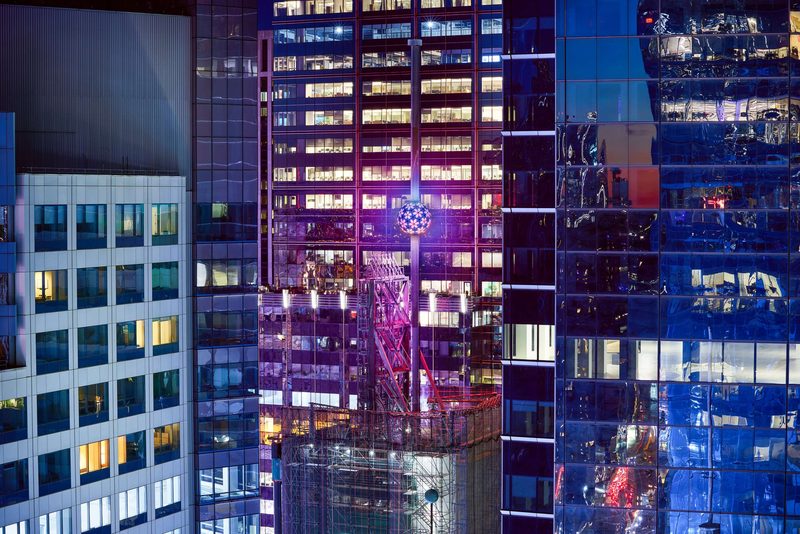
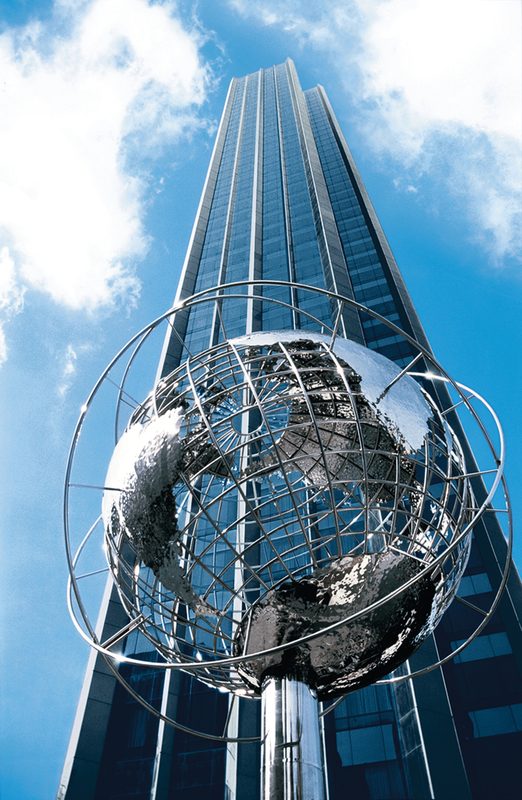
Trump International Hotel & Tower® New York
From $839 / night
Check Prices on Trip.com →
Public Holidays in March
Dates that affect opening hours, transport and crowds
Good Friday
A public holiday in these regions only: US-CT, US-DE, US-HI, US-IN, US-KY, US-LA, US-NC, US-ND, US-NJ, US-TN.
Packing Checklist
Bookmark this page — your progress is saved between visits
Need the full list with shopping links?
Climate-specific gear, brand recommendations, and what to leave at home.
View United States Packing List →Essential Tips
Insider knowledge and common pitfalls to avoid
Insider Knowledge
The Southwest in March is as good as it gets. Almost nobody from overseas goes there in spring. International visitors fixate on New York and California instead. The Grand Canyon, Sedona, Zion, and Joshua Tree hit their yearly best: cool enough to hike comfortably, warm enough to sit outside at dinner, uncrowded enough to find campsites and parking. Domestic travelers know this. The Southwest remains dramatically undertouristed by international standards in March.
Daylight Saving Time begins on the second Sunday of March. Clocks jump forward one hour at 2 AM. This catches international visitors off guard every year. You lose an hour of sleep the morning after. You might miss a tour departure or a flight. Arizona does not observe the change. This creates confusion if you are crossing state lines in the Southwest. Set your phone to automatic time. Double-check any morning bookings for the Monday after the switch.
The first two weeks of March are less crowded and less expensive than the second half almost everywhere. American school spring breaks are staggered by state and district. The bulk fall in the last two weeks of March and the first week of April. Arrive in early March. Leave before the 15th. This saves you money and elbow room at major attractions.
National park annual passes pay for themselves quickly if you visit more than two parks. March is when desert and canyon parks are at their most rewarding. The pass covers entrance fees at every national park and most federal recreation areas for a full year. Buy it at your first park entrance rather than online. Some parks have lines at the gate that move faster if you have cash or card ready and are not fumbling with a printout.
Avoid These Mistakes
Do not pack for a single climate. The United States spans subarctic to subtropical within a single time zone. A traveler flying from New York at 7°C (45°F) to Phoenix at 28°C (82°F) in the same afternoon needs different clothing for each. Checked-bag fees on domestic flights make it expensive to haul a full winter wardrobe you will not need past the first leg. The fix is layering: base layers, a fleece or light down, and a shell. This works in 5°C (41°F) drizzle and 25°C (77°F) sunshine by adding or removing pieces.
Do not underestimate distances. Do not try to cover too much ground. The United States is roughly the same size as Europe. Visiting New York, the Grand Canyon, and San Francisco in one week involves about 7,400 km (4,600 miles) of travel. This is like trying to see London, Athens, and Reykjavik on the same trip. Domestic flights are frequent but eat entire half-days once you account for airport arrival times and security. Driving distances that look reasonable on a map can mean six or eight hours on a highway with nothing but scrubland and gas stations. Pick a region. Skip the highlight reel.
Do not assume Florida is a good March destination without checking the spring-break calendar. Beaches from Destin to Miami fill with American college students from mid-March onward. Prices inflate. Shorelines pack. The party atmosphere runs past midnight. This makes it a poor fit for families, couples, or anyone seeking the relaxed beach trip the brochure promised. Want warm US beaches in March without the chaos? Try the Gulf Islands National Seashore in Mississippi, the Outer Banks of North Carolina, or the Texas coast near Port Aransas. All are quieter by an order of magnitude.
Ready to plan your trip to United States?
Now that you've got the research covered, here's where to go next.
Explore More Activities in United States
Didn't see anything interesting yet?
Browse Viator's full catalog of tours, day trips, food experiences, and private guides in United States.
See All United States Tours on Viator